What began as a conceptual idea evolved into a tested and validated restoration methodology, developed in collaboration with Stichting Zeeschelp.
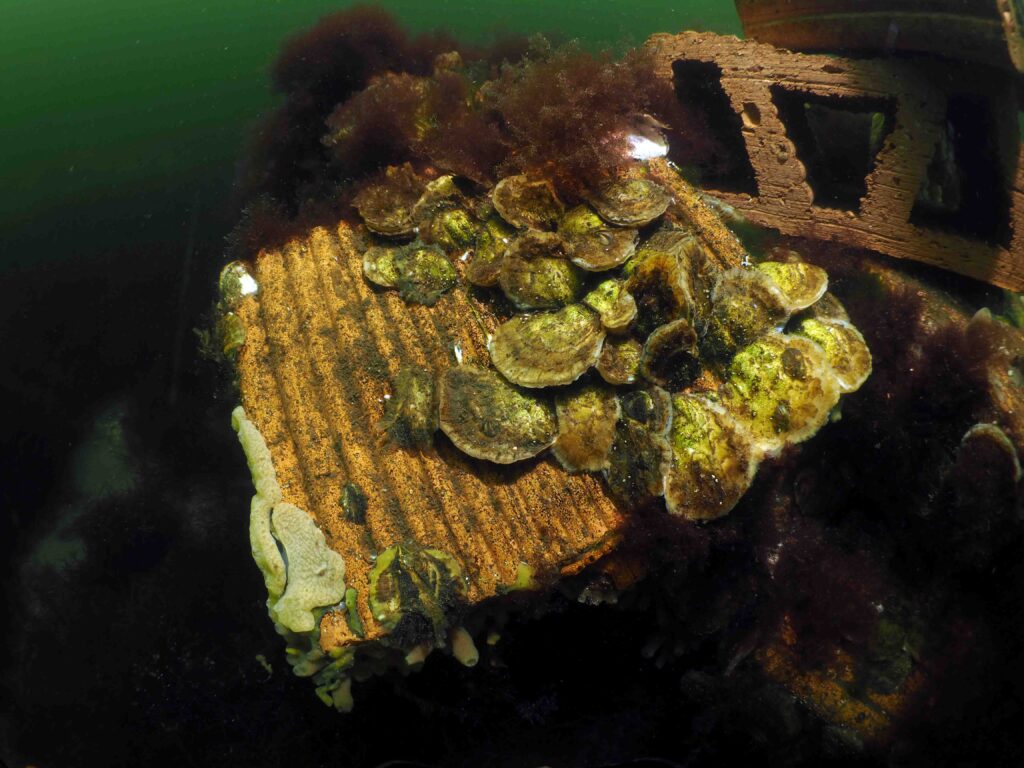
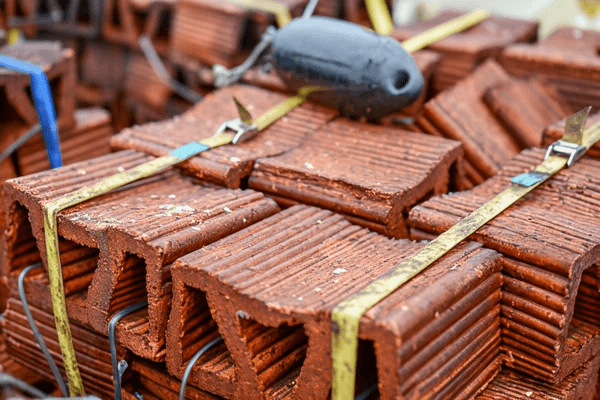
Early work focused on small-scale production and testing of Mother Reef structures. Following extensive trials to optimise substrate composition and durability, successful settlement of native oysters (Ostrea edulis) was achieved. In parallel, feasibility studies and consultations with local authorities led to the selection of a suitable site in the Veerse Meer, a brackish lagoon within the Zeeland Delta. Control and reference sites were established to support long-term ecological monitoring.
In 2024, operations scaled up in preparation for large-scale deployment. After securing the required licence, field trials began, followed by a comprehensive ecological baseline assessment in spring 2025 to document pre-deployment conditions.
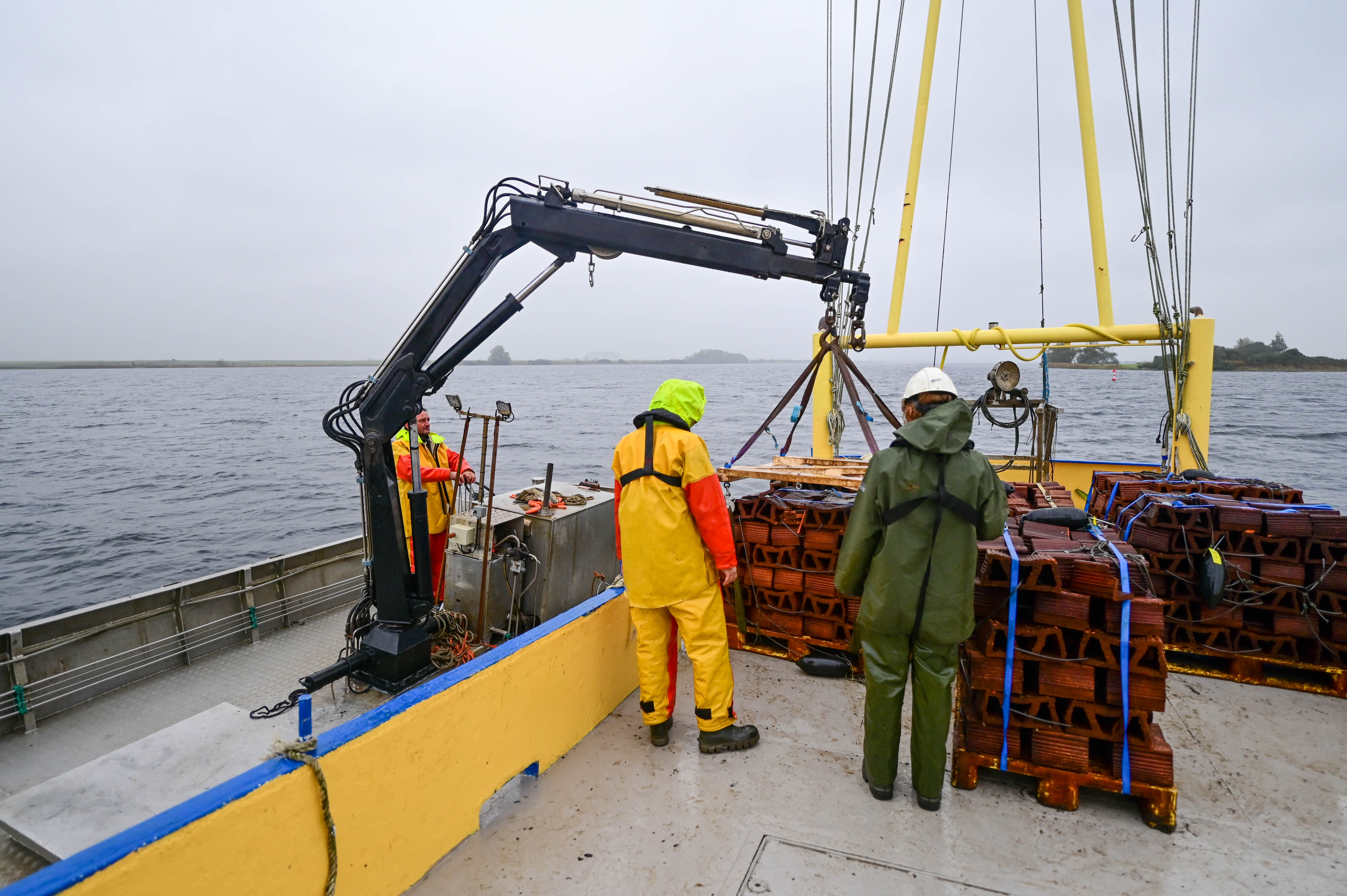
Deployment was carried out using pre-settled Mother Reef structures, produced and settled in batches at the hatchery. To increase efficiency, a mobile nursery system was developed to support large-scale oyster settlement across multiple reef units. Installation, carried out from fishing vessels, enabled rapid and efficient deployment across the project site.
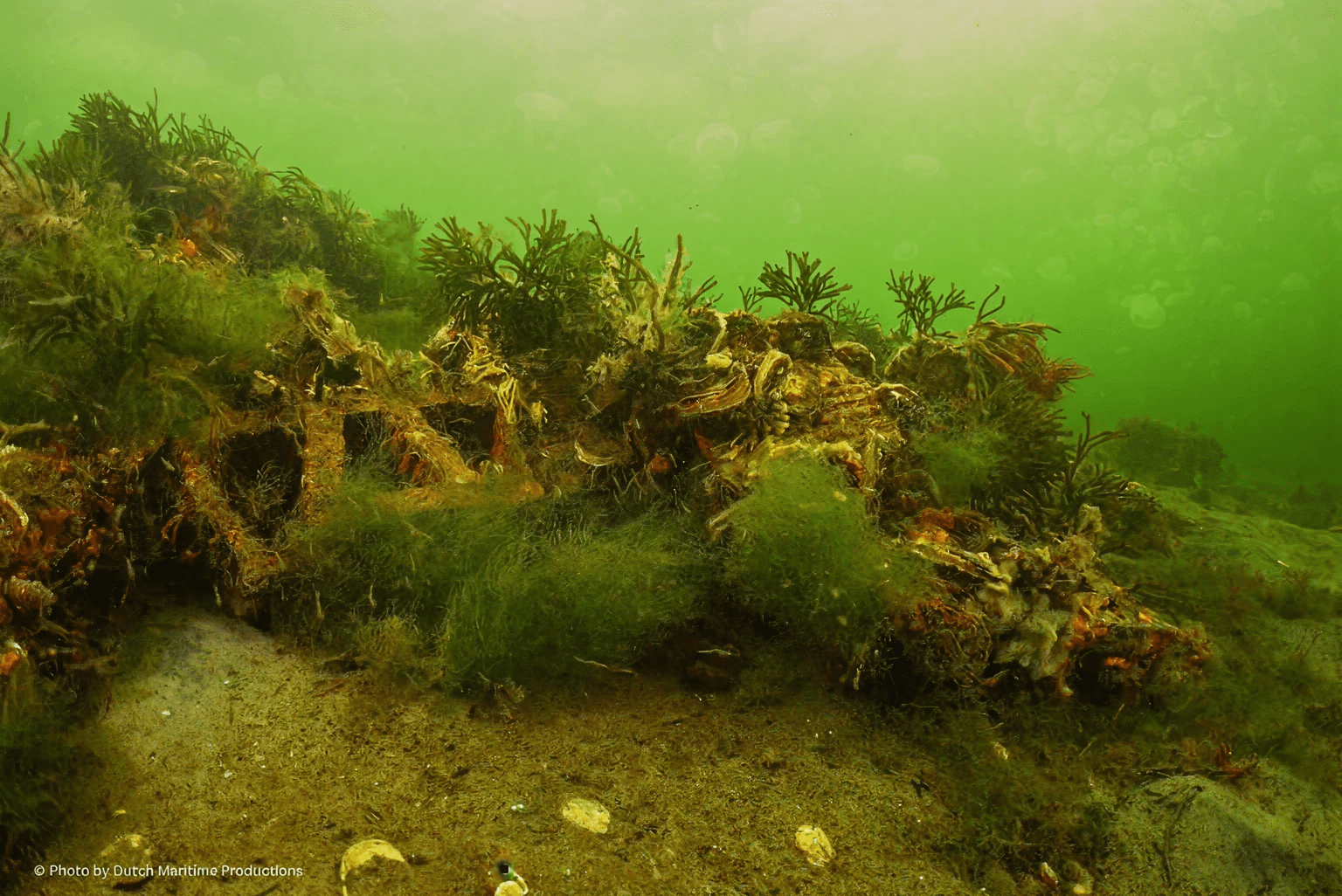
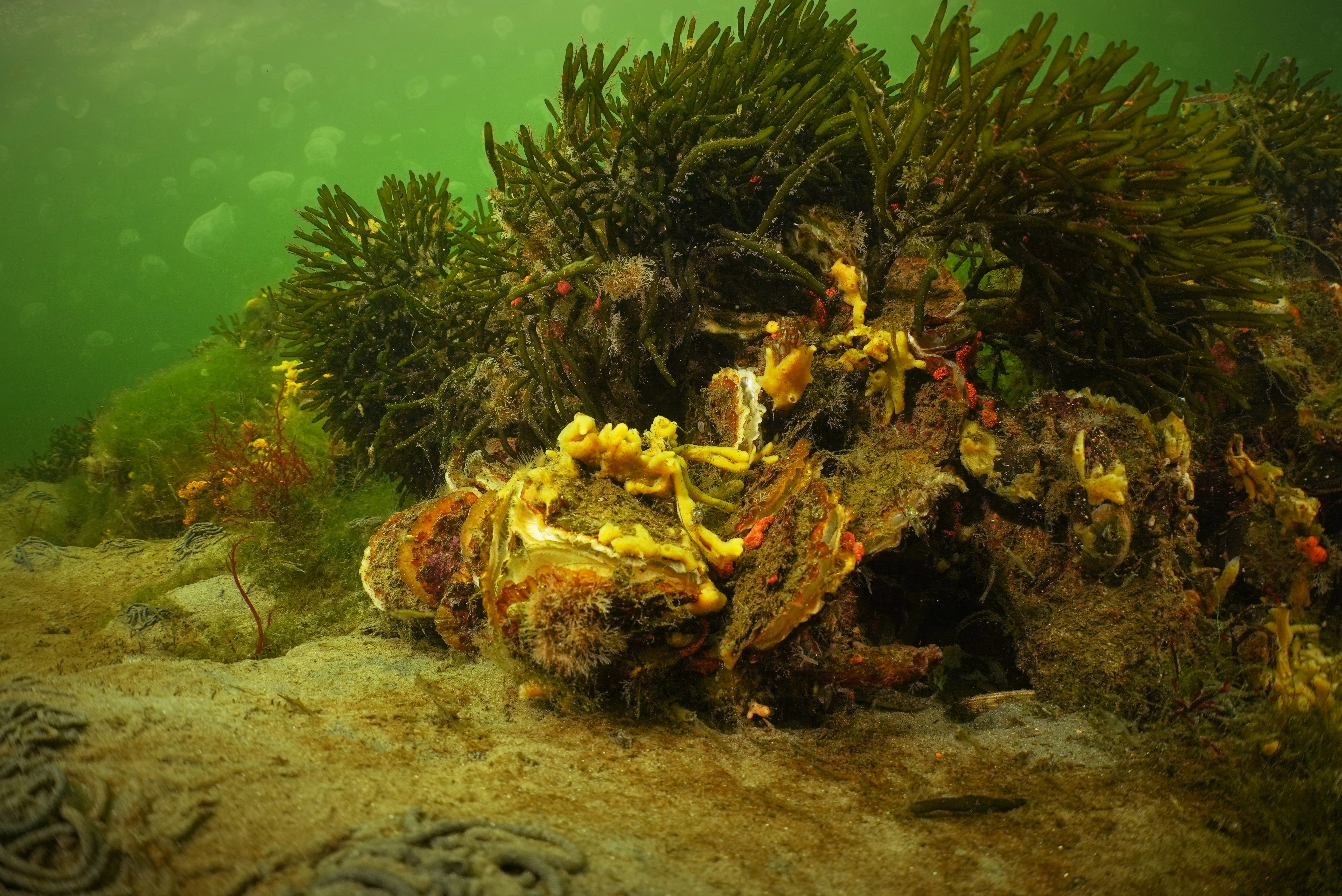
Between spring and autumn 2025, nearly 4 million native oyster spat were successfully installed. Mid-season monitoring confirmed strong growth and survival in the nutrient-rich waters of the Veerse Meer. Ongoing monitoring from 2026 onwards will track reef development and progress towards a self-sustaining system.
Deployment was carried out using pre-settled Mother Reef structures, produced and settled in batches at the hatchery. To increase efficiency, a mobile nursery system was developed to support large-scale oyster settlement across multiple reef units. Installation, carried out from fishing vessels, enabled rapid and efficient deployment across the project site.
Between spring and autumn 2025, nearly 4 million native oyster spat were successfully installed. Mid-season monitoring confirmed strong growth and survival in the nutrient-rich waters of the Veerse Meer. Ongoing monitoring from 2026 onwards will track reef development and progress towards a self-sustaining system.
Deployment was carried out using pre-settled Mother Reef structures, produced and settled in batches at the hatchery. To increase efficiency, a mobile nursery system was developed to support large-scale oyster settlement across multiple reef units. Installation, carried out from fishing vessels, enabled rapid and efficient deployment across the project site.
Between spring and autumn 2025, nearly 4 million native oyster spat were successfully installed. Mid-season monitoring confirmed strong growth and survival in the nutrient-rich waters of the Veerse Meer. Ongoing monitoring from 2026 onwards will track reef development and progress towards a self-sustaining system.
Located in a region with a long history of fisheries and aquaculture, Project Asta also examines the economic relevance of oyster reef habitats. Seasonal monitoring focuses on commercially important species, comparing their presence and abundance on and around the reefs with nearby reference areas.
Test and improve the scalability of Oyster Heaven’s restoration method.
Map the ecological development of the reef and its impact on biodiversity and ecosystem functioning.
Assess the economic value of oyster reef habitats in a region with a strong fisheries and aquaculture tradition, with specific focus on commercially relevant species.
Contribute towards local Natura 2000 conservation objectives under the Birds Directive
Test and improve the scalability of Oyster Heaven’s restoration method.
Map the ecological development of the reef and its impact on biodiversity and ecosystem functioning.
Assess the economic value of oyster reef habitats in a region with a strong fisheries and aquaculture tradition, with specific focus on commercially relevant species.
Contribute towards local Natura 2000 conservation objectives under the Birds Directive
Test and improve the scalability of Oyster Heaven’s restoration method.
Map the ecological development of the reef and its impact on biodiversity and ecosystem functioning.
Assess the economic value of oyster reef habitats in a region with a strong fisheries and aquaculture tradition, with specific focus on commercially relevant species.
Contribute towards local Natura 2000 conservation objectives under the Birds Directive
Province of Zeeland (through Zeeland in Stroomversnelling)
Province of Zeeland (through Zeeland in Stroomversnelling)
Province of Zeeland (through Zeeland in Stroomversnelling)
Project Asta forms part of Purina Europe’s Ocean Restoration Programme, which aims to restore 1,500 hectares of marine habitat by 2030. The project explores innovative and collaborative financing structures, setting a precedent for future partnerships between commercial organisations and nature restoration initiatives.
Next steps
With the deployment phase completed, the project now transitions into a long-term monitoring and adaptive management phase. Our focus shifts from intervention to ecological maturation: allowing natural processes to take over while systematically documenting reef development and its impact. Over the next eight years, annual and seasonal monitoring will assess reef growth, biodiversity development, and ecosystem functioning.
As one of the largest emerging native oyster habitats in Europe, Project Asta also creates a unique opportunity for fundamental research. Detailed study of the recovering population will generate valuable insights into native oyster ecology, reef dynamics, and their broader influence on coastal ecosystems. A study by NIOZ and the Delta Climate Centre uses Project Asta as a test site to assess how oyster reefs reduce nitrogen pollution through denitrification.
Next steps
With the deployment phase completed, the project now transitions into a long-term monitoring and adaptive management phase. Our focus shifts from intervention to ecological maturation: allowing natural processes to take over while systematically documenting reef development and its impact. Over the next eight years, annual and seasonal monitoring will assess reef growth, biodiversity development, and ecosystem functioning.
As one of the largest emerging native oyster habitats in Europe, Project Asta also creates a unique opportunity for fundamental research. Detailed study of the recovering population will generate valuable insights into native oyster ecology, reef dynamics, and their broader influence on coastal ecosystems. A study by NIOZ and the Delta Climate Centre uses Project Asta as a test site to assess how oyster reefs reduce nitrogen pollution through denitrification.
Next steps
With the deployment phase completed, the project now transitions into a long-term monitoring and adaptive management phase. Our focus shifts from intervention to ecological maturation: allowing natural processes to take over while systematically documenting reef development and its impact. Over the next eight years, annual and seasonal monitoring will assess reef growth, biodiversity development, and ecosystem functioning.
As one of the largest emerging native oyster habitats in Europe, Project Asta also creates a unique opportunity for fundamental research. Detailed study of the recovering population will generate valuable insights into native oyster ecology, reef dynamics, and their broader influence on coastal ecosystems. A study by NIOZ and the Delta Climate Centre uses Project Asta as a test site to assess how oyster reefs reduce nitrogen pollution through denitrification.
Project Asta in the News
EW - Zeeuwse platte op Limburgse klei
Duizenden babyoesters moeten biodiversiteit Veerse Meer herstellen
North Sea Oyster Project Pitches Sustainability and Profit
EW - Zeeuwse platte op Limburgse klei
Duizenden babyoesters moeten biodiversiteit Veerse Meer herstellen
North Sea Oyster Project Pitches Sustainability and Profit
EW - Zeeuwse platte op Limburgse klei
Duizenden babyoesters moeten biodiversiteit Veerse Meer herstellen
North Sea Oyster Project Pitches Sustainability and Profit
Talk to Our Team
Explore whether oyster reefs are the right solution for your needs by discussing feasibility, potential benefits, and next steps for your project.
If you prefer e-mailing, reach us at: